Originals — posts I've written myself.

Join 9,500+ smart developers

Get my monthly newsletter with what I learn from running Spatie, building Oh Dear, and maintaining 300+ open source packages. Practical takes on Laravel, PHP, and AI that you can actually use.

"Always fresh, useful tips and articles. Carefully selected community content. My favorite newsletter, which I look forward to every time."

Bert De Swaef — Developer at Vulpo & Youtuber at Code with Burt

No spam. Unsubscribe anytime. You can also follow me on X.

My Claude Code setup original

by Freek Van der Herten – 4 minute read

I've been using Claude Code as my daily driver for coding tasks. Over time, I've built up a pretty specific configuration that makes the whole experience better. I keep everything in my dotfiles repo under config/claude/, so it's easy to sync across machines. In this post I'll walk through my setup.…

Read more

Generate OG images for your Laravel app original

by Freek Van der Herten – 5 minute read

When you share a link on Twitter, Facebook, or LinkedIn, the platform shows a preview image. Getting those Open Graph images right usually means either using an external service or setting up a separate rendering pipeline. We just released laravel-og-image, a package that lets you define your OG image as HTML right inside your Blade views. The package takes a screenshot of that HTML and serves it as the OG image. No external API needed, everything runs on your own server.

Let me walk you through what the package can do.

Read more

Building a PHP CLI for humans and AI agents with almost no hand-written code original

by Freek Van der Herten – 6 minute read

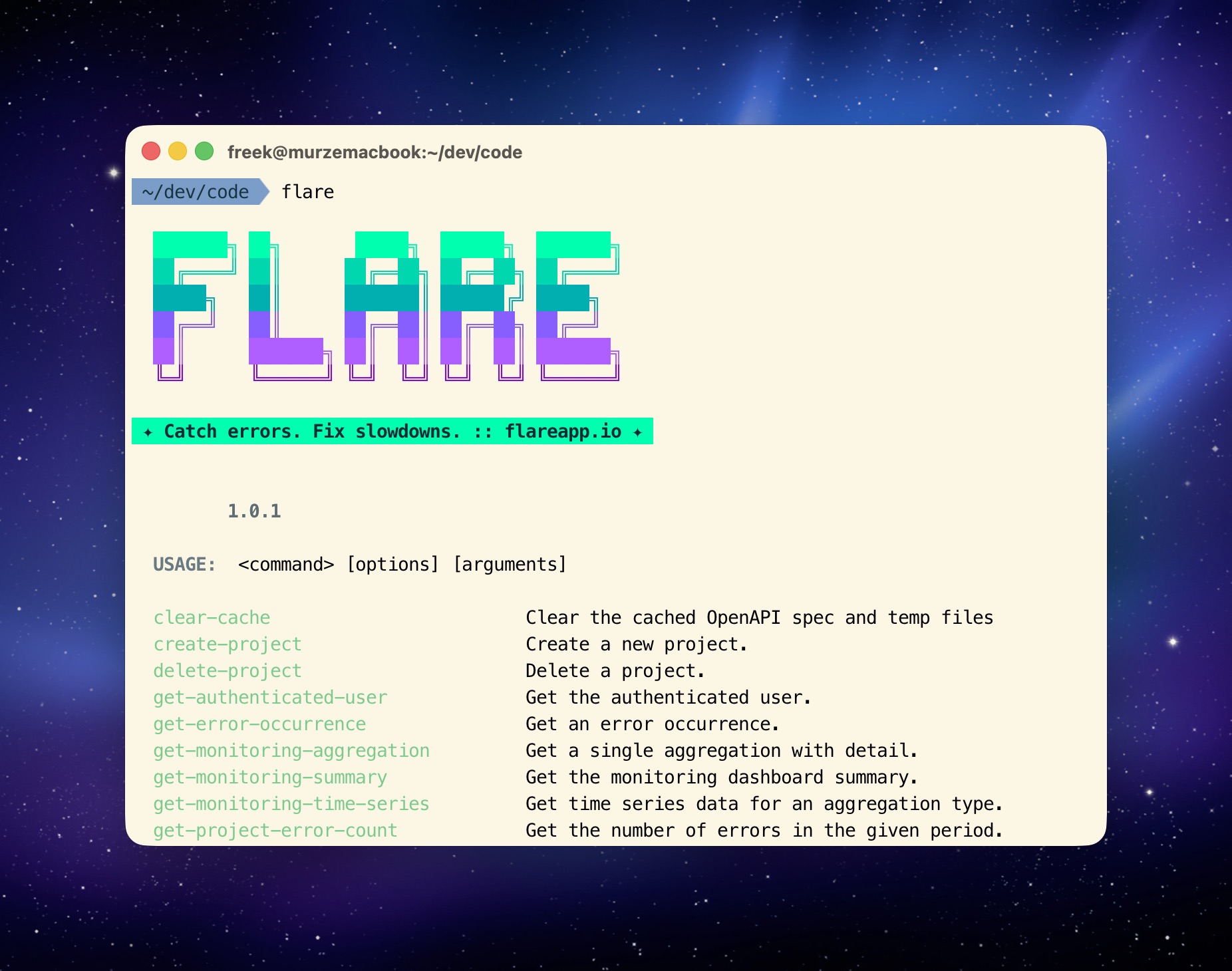
We recently released the Flare CLI, a command-line tool to manage your errors and performance data. It also ships with an agent skill that lets AI coding agents use Flare on your behalf.

The CLI has dozens of commands and hundreds of options, yet we only wrote four commands by hand. Our laravel-openapi-cli package made this possible: point it at an OpenAPI spec, and it generates fully typed artisan commands for every endpoint automatically.

Here's how we put it all together.

Read more

Let your AI coding agent fix your errors and review performance original

by Freek Van der Herten – 4 minute read

The Flare CLI lets you manage errors and performance monitoring from the terminal. It was built with almost no hand-written code, generated from our OpenAPI spec. Having a CLI is useful on its own, but where it gets really interesting is when you let an AI coding agent use it.

The Flare CLI ships with an agent skill that teaches AI agents like Claude Code, Cursor, and Codex how to interact with Flare on your behalf. Let me show you how it works.

Read more

Introducing the Flare CLI original

by Freek Van der Herten – 4 minute read

At Flare, we track errors and monitor performance for your applications. Until now, that meant opening the Flare dashboard in your browser whenever you wanted to check on things.

We just released the Flare CLI, a command-line tool that lets you manage your errors, projects, and performance monitoring data directly from the terminal. It also ships with an agent skill that lets AI coding agents like Claude Code and Cursor use Flare on your behalf. And the fun part: the entire CLI was built with almost no hand-written code, generated from our OpenAPI spec.

Let me walk you through how to install and use the CLI.

Read more

Adding a custom status line to Claude Code original

by Freek Van der Herten – 2 minute read

Claude Code has a nice little feature called the status line that lets you add a custom bar at the bottom of the terminal. I use it to show the current repo name and how much of the context window I've used. To set this up, first create a script at ~/.claude/statusline.sh: #!/bin/bash # Read JSON…

Read more

A clean API for reading PHP attributes original

by Freek Van der Herten – 3 minute read

PHP 8.0 introduced attributes, and they're a great way to add structured metadata to classes, methods, properties, constants, and parameters. The concept is solid, but the reflection API you need to actually read them is surprisingly verbose. What should be a simple one-liner ends up being multiple lines of boilerplate every time. And if you want to find all usages of an attribute across an entire class, you're looking at deeply nested loops.

We just released spatie/php-attribute-reader, a package that gives you a clean, static API for all of that. Let me walk you through what it can do.

Read more

How to set up PHP autoformatting in Zed using Pint and PHP CS Fixer original

by Freek Van der Herten – 3 minute read

I only switched to Zed last week (you can see my full setup on my uses page), so I'm still learning the ropes. One thing I ran into is that its external formatter configuration is global. You configure one formatter command for PHP, and that's what gets used in every project you open.

The problem is that not all of my projects use the same formatter. Some use Pint, some use PHP-CS-Fixer directly. My Zed config originally pointed to ./vendor/bin/pint, which meant it silently did nothing in projects that don't have Pint installed.

Let me walk you through how I solved this.

Read more

Laravel Response Cache v8 is here: now offers flexible caching original

by Freek Van der Herten – 6 minute read

Our laravel-responsecache package speeds up your app by caching entire responses on the server. When the same page is requested again, the cached response is served without hitting your controller at all.

We just released v8, a new major version with a powerful new feature: flexible caching. It uses a stale-while-revalidate strategy, so that every visitor gets a fast response, even when the cache is being refreshed.

Let me walk you through it.

Read more

Laravel Permission v7 has been launched original

by Freek Van der Herten – 3 minute read

Laravel's built-in authorization is great when permissions are defined in code. With gates and policies, you can write logic like this:

// Defined in code, requires a deploy to change
Gate::define('edit-posts', function (User $user) {
    return $user->is_admin;
});

But in some projects roles and permissions are dynamic: created by users, managed through an admin panel, or changed at runtime without deploying code. Our Laravel Permission package can help you dynamically create roles and permissions.

We just released v7 which doesn't bring any new features, but cleans up the internal code and modernizes it. Let me walk you through what the package can do.

Read more

Laravel PDF v2 has been released: adds support for Laravel Cloud and easy queuing original

by Freek Van der Herten – 6 minute read

A while ago, we released laravel-pdf, a package to generate PDFs in Laravel apps.

Under the hood, it used Browsershot (and therefore Puppeteer/Chrome) to convert HTML to PDF. That approach works great, but it does require Node.js and a headless Chrome binary on your server.

Last week, my buddy Dries shared on X how to generate PDFs using Cloudflare services. This way doesn’t require Node or any binaries. Very neat! This unlocks PDF generation for environments where Node or Chrome cannot be installed easily, like Laravel Cloud.

To support this way of rendering a PDF, we’ve released a new major release (v2) of Laravel PDF. The package now ships with three drivers: Browsershot, Cloudflare Browser Rendering, and DOMPDF. You can also create your own driver. On top of that, we've added queued PDF generation and the ability to set PDF metadata. And to let your AI understand our package, we've added a Laravel Boost skill.

Let me walk you through all of it.

Read more

I built a native mobile word game in two weeks original

by Freek Van der Herten – 6 minute read

At Laracon India, I launched a major update of Ray. For that talk, I needed a little demo project to showcase Ray. I built a simple website about a then-fictional mobile app to play a Scrabble-like word game called WordStockt.

But then I got curious: how far could I push AI-assisted development? Could I actually just create the whole game? After about 10 days, WordStockt is a fully functional word game that's 98% vibe-coded. It's available for iOS and Android. In this post, I'd like to tell you more about it.

Read more

Introducing Spatie Guidelines for Laravel Boost original

by Freek Van der Herten – 2 minute read

If you're using AI tools like Claude Code to help write code, you've probably noticed they don't automatically know your team's coding conventions. The AI might write perfectly valid PHP, but it won't follow your specific style guide unless you tell it to. That's the problem Laravel Boost solves. It…

Read more