I built a native mobile word game in two weeks original
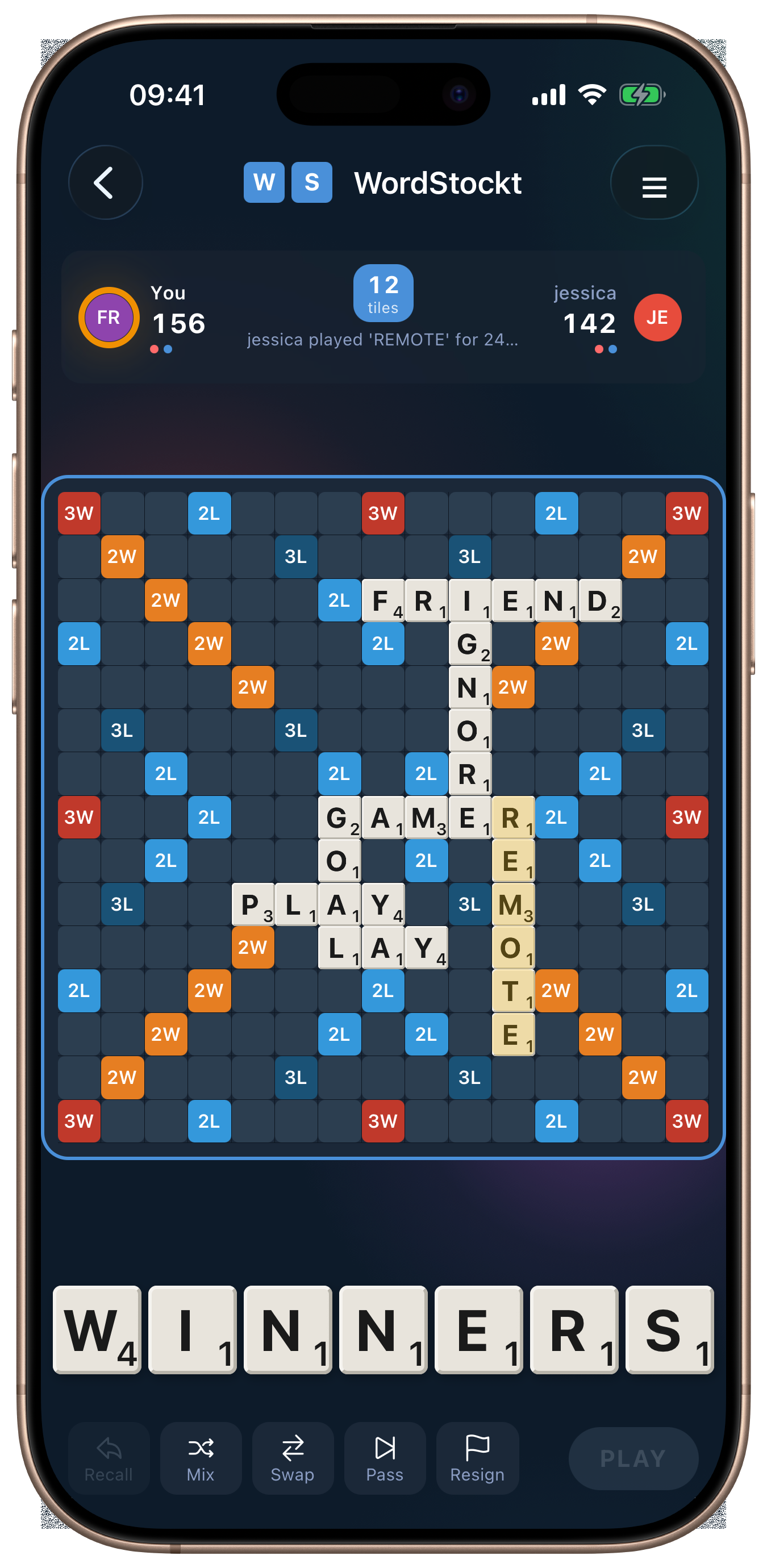
At Laracon India, I launched a major update of Ray. For that talk, I needed a little demo project to showcase Ray. I built a simple website about a then-fictional mobile app to play a Scrabble-like word game called WordStockt.
But then I got curious: how far could I push AI-assisted development? Could I actually just create the whole game? After about 10 days, WordStockt is a fully functional word game that's 98% vibe-coded. It's available for iOS and Android. In this post, I'd like to tell you more about it.
From Demo to Real App
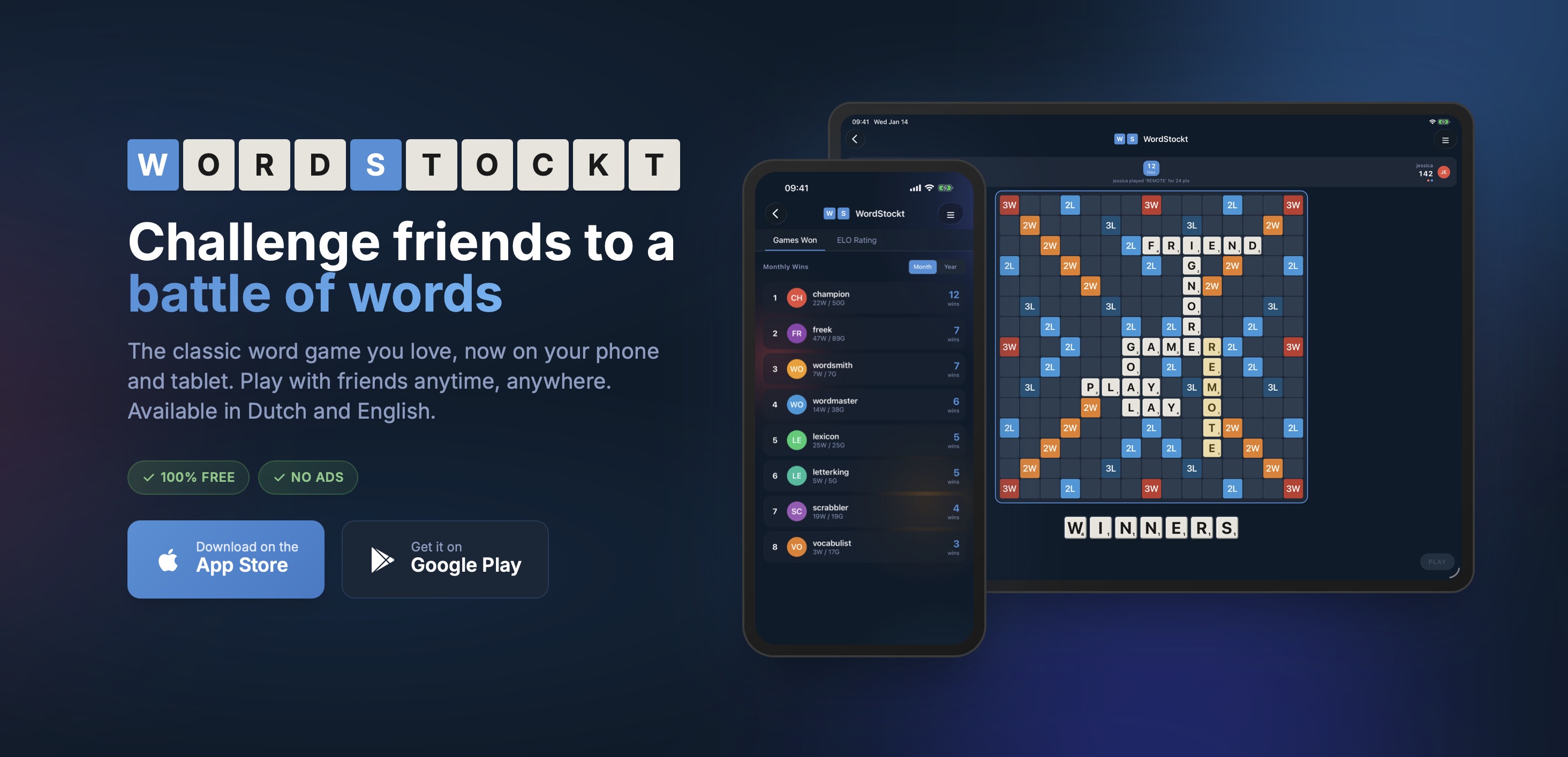
WordStockt is probably the most elaborate demo I've ever built for a talk. It's a classic word game (think Scrabble) where you can challenge friends to asynchronous matches, track your stats, and climb the leaderboards. You can play at your own pace: make a move, close the app, and come back when your opponent has played. Push notifications let you know when it's your turn.
Before writing any code, I started describing the main functionalities of the app in a markdown file. First, I let the AI interview me about the requirements I had written to clarify some details. Next, I instructed the AI to split up the work into multiple phases, each with its own detailed markdown file. After I refined those markdowns further, I instructed the AI to start building it phase by phase.
Since I know Laravel quite well, I was reasonably sure I could guide the AI well enough to produce good results for the backend. I reviewed the code that it produced, and pushed it to use the patterns and code organization that I like.
For the front-end, I was a little bit more nervous. According to my front-end colleagues at Spatie, the best way of building a native app from a single codebase was Expo / React Native. I didn't have experience with either of those (I do know a bit of regular React), so I couldn't always tell if the AI produced quality results. The code it produced always did work however.
Something that I really am not accustomed to doing myself is coming up with good design. Sure, I can do some basic styling with Tailwind, but that's about it. To start with the design, I let the AI propose and show me ideas using Ray.
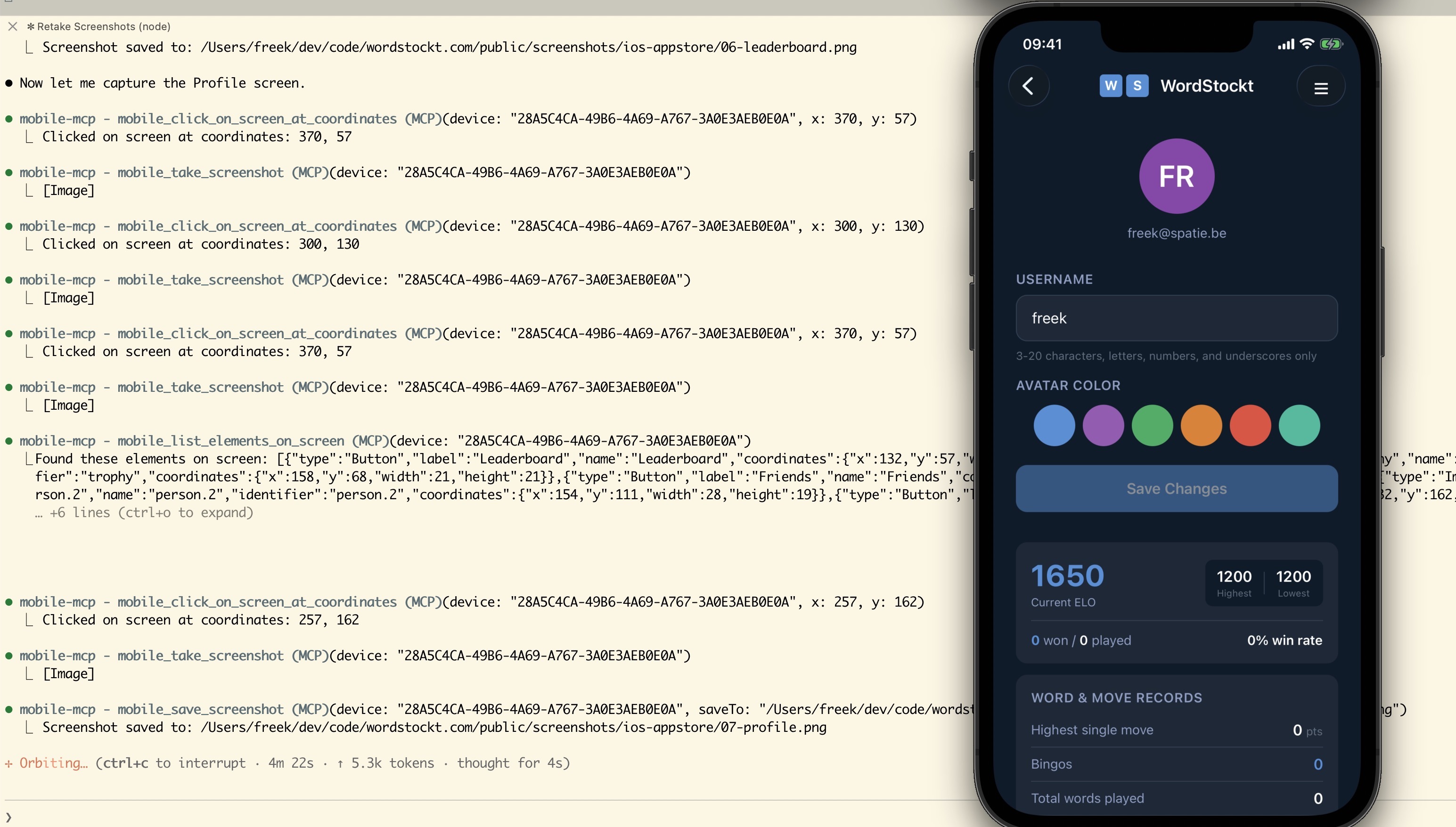
AI also assisted with non-coding talks writing copy, creating app icons, and taking screenshots for various app stores (showing in screenshot below).
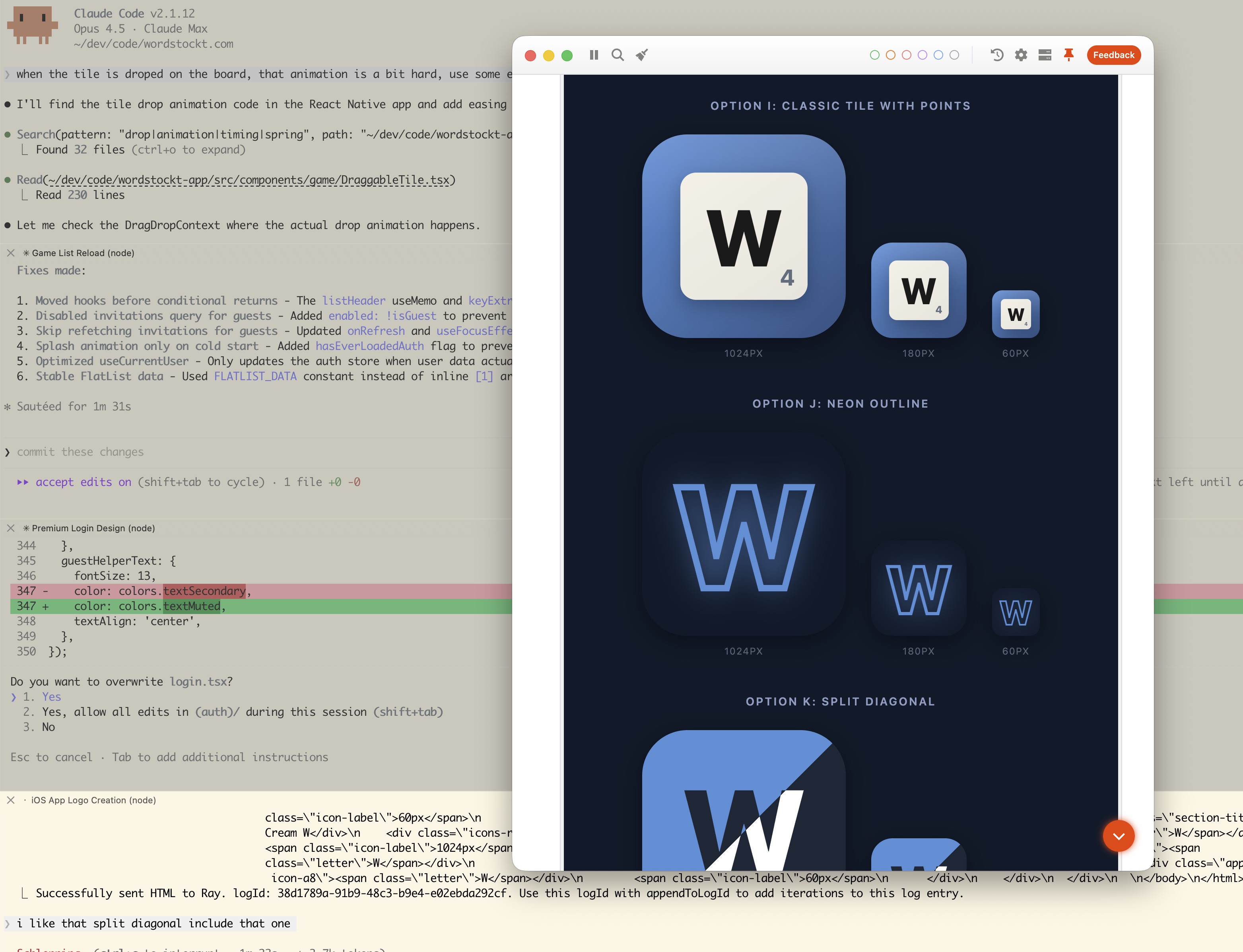
When reading the above, you might think that all things were built sequentially, but in reality I was doing things at the same time. In the screenshot belong, you can see me using one Claude session working on animations, and in another one, I'm letting the AI work an icons and letting it preview them in Ray.
In total, it took me about 10 days to build this app from start to finish. That includes the design, the backend Laravel API, the apps, the website, and setting up all services.
WordStockt is open source
I've decided to open source the entire project. It's a good example of a modern Laravel API powering a React Native mobile app, and I hope others can learn from it.
The Laravel backend API is available at github.com/spatie/wordstockt.com. The production version of this app is hosted on Forge. For real-time updates, so you instantly see when your opponent plays, I'm using Reverb.
The iOS and Android apps are built from a single React Native codebase. You'll find the code in this repo: github.com/spatie/wordstockt-app. Also noteworthy is that Expo is used to send native push notifications.
PRs to these codebases are welcome! If you find bugs, want to add features, or improve the AI's code (there's probably room for that), feel free to contribute.
What does this all mean
Building WordStockt in 10 days would have been impossible for me without AI. The productivity gains are real and significant. I built a complete product across technologies I don't fully master, in a fraction of the time it would have taken otherwise. Honestly, previously I couldn't have built this without the help of my team members.
That said, I don't think this replaces the need to understand what you're building. Or to have passionate fellow developers around you. I could guide the Laravel side confidently because I know Laravel. The React Native side worked, but I have less confidence in its quality because I can't fully evaluate it. AI amplifies what you already know more than it substitutes what you don't. Therefore, like argued in my talk at Laracon India, I think it will remain important to invest in technical skills and knowledge.
Where this goes, I honestly don't know. Some call this the rise of industrial software, comparing it to how manufacturing transformed other industries. There will be challenges for junior developers trying to learn, for teams figuring out how to do code review when AI generates code faster than humans can review it, and for all of us adapting to a faster pace of change.
But I'm optimistic. My buddy Mattias wrote that AI makes web development fun again and that it's no longer optional. I fully agree with both. The barrier to building things is lower than ever. Ideas that would have stayed ideas because "I don't have time" or "I don't know that stack" are now within reach. That feels like an opportunity worth embracing.
In closing
WordStockt is completely free with no ads. I built it for fun and as a demo, not to make money. Download it now on the App Store or Google Play.