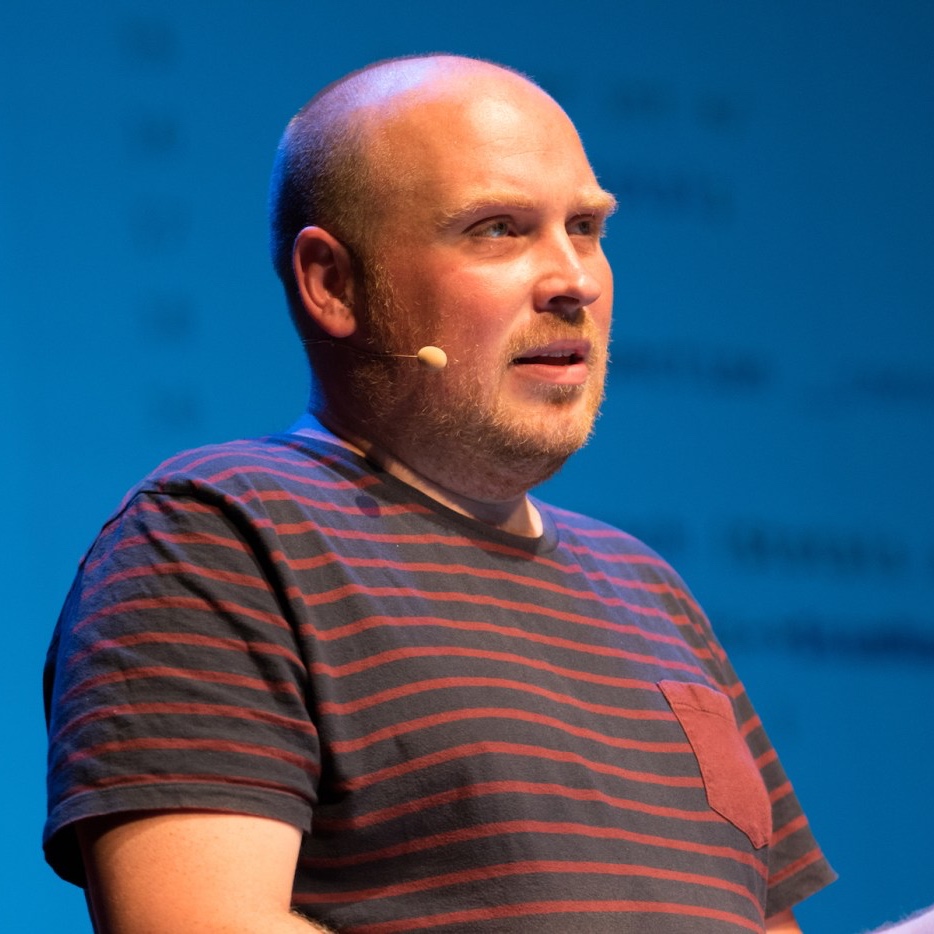
Talking about Laravel, Oh Dear, and AI
In this interview, I talk about Laravel, application monitoring, and how AI is changing the way developers work.
Hafiz compares Scotty with Laravel Envoy and explains why Spatie's new deploy tool is a nicer fit for SSH-based deployments. He walks through the plain bash format, improved terminal output, migration path, and zero-downtime deployment workflow.
Read more [hafiz.dev]
Join 9,500+ smart developers
Get my monthly newsletter with what I learn from running Spatie, building Oh Dear, and maintaining 300+ open source packages. Practical takes on Laravel, PHP, and AI that you can actually use.
No spam. Unsubscribe anytime. You can also follow me on X.
"As a Laravel developer, this is the one newsletter I most look forward to. Freek has a talent for distilling packages or techniques down to something immediately useful - one tip can save you hours and even weeks. It's concise and practical and highly relevant."
We turned our internal coding guidelines into reusable AI skills, so coding assistants can follow the same conventions their team uses. The package works with Laravel Boost and the broader skills.sh ecosystem, and ships with skills for Laravel PHP, JavaScript, version control, and security.
Read more [spatie.be]
– daryllegion.com - submitted by Daryl Legion
Validate nested array inputs in Laravel form requests without the N+1. Prefetch lookup data in prepareForValidation and check items in memory.
Read more [daryllegion.com]
Over the past few months we've been building There There at Spatie, a support tool shaped by the two decades we've spent running our own customer support. The goal is simple: the helpdesk we always wished we had.
We care about using AI in a particular way. It should help support agents write better replies, not substitute for them. The human stays in charge of the conversation, and the model does the unglamorous work of drafting, rephrasing, and suggesting links. There There is in private beta right now, and you can apply for early access at there-there.app.
We're building There There with Laravel and Inertia, and we lean heavily on the latest features Inertia v3 brings. This post is about another one: prefetching on hover.
A few months ago we started building There There, a helpdesk we're making at Spatie. The premise is simple. After two decades of running customer support for our open source work and our SaaS apps, we wanted the tool we always wished existed.
One thing we care about in particular is using AI to help humans craft better responses, not to replace them. The agent stays in charge of the conversation. The model just helps them reply faster and a little sharper. There There is in private beta right now, and you can apply for early access at there-there.app.
We're building There There with Laravel and Inertia, and we lean heavily on the latest features Inertia v3 brings. In this post I'd like to give one example: optimistic updates.
SlideWire is a Laravel package for building browser-based presentation decks using Livewire components and Blade templates. It comes with built-in navigation, transitions, syntax highlighting, and Mermaid diagrams.
Read more [laravel-news.com]
A deep dive into how Blaze works internally. Matt Stauffer builds two toy versions from scratch to show how Blaze shifts Blade component rendering from runtime to compile time.
Read more [tighten.com]
The Laravel blog walks through how to implement the five multi-agent patterns from Anthropic's "Building Effective Agents" research using the Laravel AI SDK. Prompt chaining, parallelization, routing, orchestrator-workers, and evaluator-optimizer loops, all built with just the agent() helper.
Read more [laravel.com]
We just released Scotty, a beautiful SSH task runner. It lets you define deploy scripts and other remote tasks, run them from your terminal, and watch every step as it happens. It supports both Laravel Envoy's Blade format and a new plain bash format. Why we built Scotty Even though services like…
Michael Dyrynda found that switching from fill() to set() in Livewire tests reduced his test suite from 22 seconds to 4 seconds. The difference: fill triggers a Livewire round-trip per field, while set batches them into one.
Read more [dyrynda.com.au]
– liminal.aschmelyun.com - submitted by Andrew Schmelyun
A static, free, and open-source Laravel playground that runs entirely in the browser! Comes with a sqlite db, artisan commands, two-way file syncing, github imports, and more.
Read more [liminal.aschmelyun.com]
We just released v5 of laravel-activitylog, our package for logging user activity and model events in Laravel.
In Flare, Mailcoach, and Oh Dear we use it to build audit logs, so we can track what users are doing: who changed a setting, who deleted a project, who invited a team member. If you need something similar in your app, this package makes it easy.
This major release requires PHP 8.4+ and Laravel 12+, and brings a cleaner API, a better database schema, and customizable internals. Let me walk you through what the package can do and what's new in v5.
– x.com
Chris Mellor wrote a practical guide on setting up Zed as a Laravel IDE, covering PHP extensions, Pint formatting, Blade support, and how it compares to PHPStorm.
Read more [x.com]
A thorough walkthrough of building a RAG system in Laravel using the new AI SDK, Postgres for vector storage, and Livewire 4 for a streaming chat UI. Covers everything from what RAG is and how semantic search works to embedding documents and querying them.
Read more [tighten.com]
Daniel Coulbourne walks through building an MCP server with the official laravel/mcp package. He built one for his blog in about 20 minutes, then used it to write and publish the post you're reading.
Read more [thunk.dev]
A practical look at why you should populate essential data from migrations instead of seeders. Once your app is live, manually running seeders becomes a deployment risk. Migrations are deterministic, automatic, and roll back cleanly.
Read more [spatie.be]
We just released v7 of spatie/laravel-query-builder, our package that makes it easy to build flexible API endpoints. If you're building an API with Laravel, you'll almost certainly need to let consumers filter results, sort them, include relationships and select specific fields. Writing that logic by hand for every endpoint gets repetitive fast, and it's easy to accidentally expose columns or relationships you didn't intend to.
Our query builder takes care of all of that. It reads query parameters from the URL, translates them into the right Eloquent queries, and makes sure only the things you've explicitly allowed can be queried.
// GET /users?filter[name]=John&include=posts&sort=-created_at $users = QueryBuilder::for(User::class) ->allowedFilters('name') ->allowedIncludes('posts') ->allowedSorts('created_at') ->get(); // select * from users where name = 'John' order by created_at desc
This major version requires PHP 8.3+ and Laravel 12 or higher, and brings a cleaner API along with some features we've been wanting to add for a while.
Let me walk you through how the package works and what's new.
We're proud to release v3 of laravel-site-search, a package that crawls and indexes your entire site. Think of it as your own private Google. Point it at a URL, let it crawl every page, and get full-text search results back.
Previous versions required Meilisearch as the search engine. That works well, but it means running a separate service.
With v3, your application's own database is all you need. It supports SQLite, MySQL, PostgreSQL, and MariaDB out of the box, and it's the new default.
Let me walk you through it.
Sometimes you need to access a private property or method on an object that isn't yours. Maybe you're writing a test and need to assert some internal state. Maybe you're building a package that needs to reach into another object's internals. Whatever the reason, PHP's visibility rules are standing in your way.
Our spatie/invade package provides a tiny invade function that lets you read, write, and call private members on any object.
You probably shouldn't reach for this package often. It's most useful in tests or when you're building a package that needs to integrate deeply with objects you don't control.
Let me walk you through how it works.