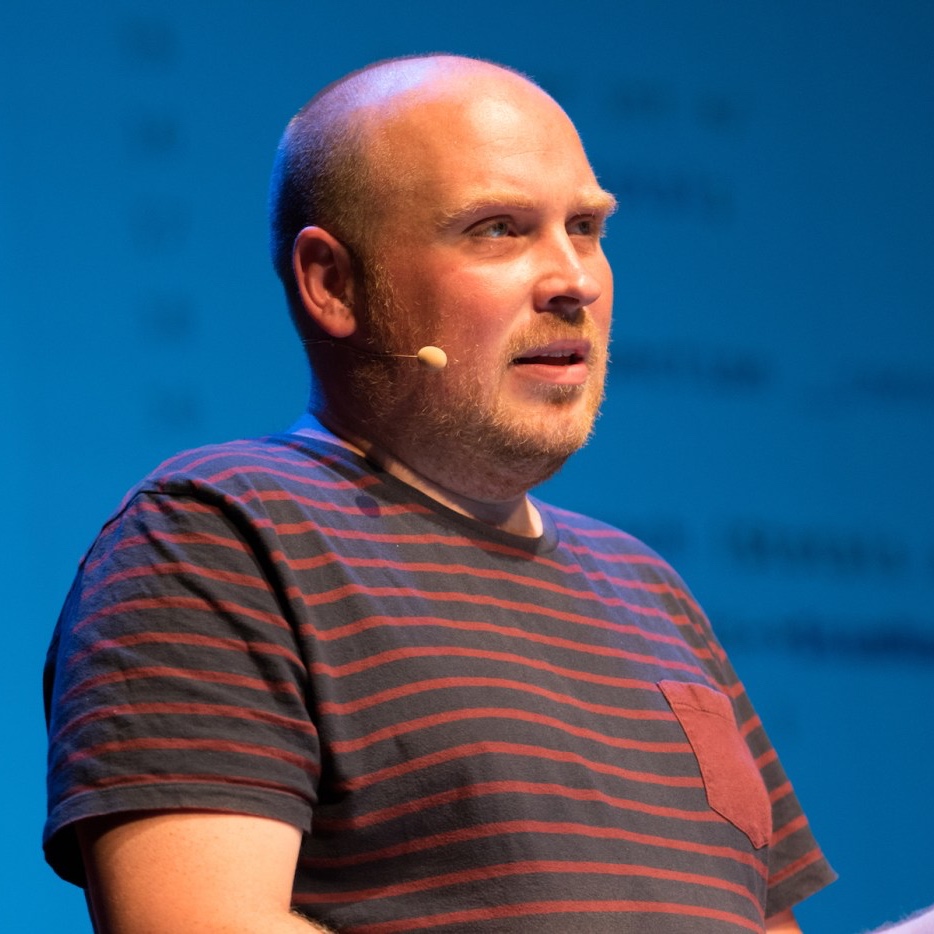
Video: a first look at the alpha version of Mailcoach original
by Freek Van der Herten – 3 minute read – Edit
by Freek Van der Herten – 3 minute read – Edit
– jolicode.com – Edit
FFI lets you include external libraries written in other programming languagues in your PHP code.
PHP Foreign Function Interface, or FFI for fans, is a PHP extension that allows you to include with ease some externals libraries into your PHP code. That means it’s possible to use C, Go, Rust, etc. shared library directly in PHP without writing a PHP Extension in C. This concept exists for years in other languages like Python or Go.
Read more [jolicode.com]
Join 9,500+ smart developers
Get my monthly newsletter with what I learn from running Spatie, building Oh Dear, and maintaining 300+ open source packages. Practical takes on Laravel, PHP, and AI that you can actually use.
No spam. Unsubscribe anytime. You can also follow me on X.
"As a Laravel developer, this is the one newsletter I most look forward to. Freek has a talent for distilling packages or techniques down to something immediately useful - one tip can save you hours and even weeks. It's concise and practical and highly relevant."
– pociot.dev – Edit
I'm a big fan of this approach and use Form Request like this quite often.
Let me show you what form requests can do for you - and how you can make use of them to write beautiful, expressive APIs.
Read more [pociot.dev]
by Freek Van der Herten – 6 minute read – Edit
– stitcher.io – Edit
PHP 7.4 will probably be released this week. My colleague Brent wrote a good post on all the shiney new things this release brings.
PHP 7.4, the latest version before PHP 8, brings lots of new features, syntax additions and fixes. We need to wait a little longer though: PHP 7.4 will be released on November 28, 2019. In this post you'll find a list with everything that's new and changed to help you prepare for the upgrade.
Read more [stitcher.io]
by Freek Van der Herten – 2 minute read – Edit
– ma.ttias.be – Edit
My buddy Mattias recently improved the performance of the Oh Dear uptime checker servers by disabling the HTTP sessions.
If you run a Laravel application purely as a headless API, you can benefit from disabling the HTTP sessions. We use this setup for our Oh Dear monitoring service, where the remote servers that check for uptime are all headless Laravel setups.
Read more [ma.ttias.be]
by Freek Van der Herten – 7 minute read – Edit
My team and I currently building Mailcoach, a solution to self-host newsletters and email campaigns. In Mailcoach you can create new users to use the app.
How should these new users be onboarded? The easy way out would be to send these new users a default password reset notification to those users, but that isn't a good first experience. The default auth scaffold by Laravel doesn't help us here: it only contains functionality to log in and to let users register themselves.
To onboard new users created by other users, I've created a package called laravel-welcome-notification which can send a welcome notification to new users that allows them to set an initial password.
In this blogpost I'd like to explain how you can use the package).
– stitcher.io – Edit
My colleague Brent solved a performance by creating a custom relation
One last solution that came to mind was to load all people, all contracts, and map them together manually. In the end that's exactly what I ended up doing, though I did it in the cleanest possible way: using custom relations.
Read more [stitcher.io]
– twitter.com – Edit
? Did you know you can add query-constraints when eager loading relationships in Laravel?
— Stefan Zweifel (@_stefanzweifel) November 12, 2019
Perfect opportunity to improve query performance when your relationships return thousands of models.
↳ Full example: https://t.co/RsezzpkWoC pic.twitter.com/nwjC7U8Oqa
Read more [twitter.com]
by Freek Van der Herten – 3 minute read – Edit
In this small blog post, I'd like to give you a couple of tips to make your Artisan commands better.
– tideways.com – Edit
On the Tideways blog, Benjamin Eberlei explains PHPs garbage collection internals.
It's helpful to have a broad understanding of how garbage collection works in PHP, along with how you can interact with it so that you can create high performing applications.
Read more [tideways.com]
– jasonmccreary.me – Edit
At Laracon AU, Jason McCreary gave an excellen talk on how to create maintainable Laravel apps. On his blog he published a written down version of the talk.
Being the author of BaseCode and creator of Shift gives me a unique insight into writing Laravel applications. I combined 20 years of writing code with supporting over 20,000 Laravel upgrades into 10 tips for crafting maintainable Laravel applications.
Read more [jasonmccreary.me]
by Freek Van der Herten – 5 minute read – Edit
For a couple of projects I needed to read and write a couple of very large Excel and CSV files. I didn't find a good package that does this so I decided to create one myself. Under the hood it uses generators, so memory usage will remain low, even when working with large files.
In this blogpost I'd like to walk you through spatie/simple-excel.
by Freek Van der Herten – 1 minute read – Edit
A couple of days ago my colleague Brent published a blogpost on Domain Oriented Laravel. In short, he makes the case for organising your code around business concepts or features. That might sound very "heavy" or daunting, but it's actually for easy to get started with.
In this short video I explain how you can use PhpStorm to refactor your code. Make up your own mind if you need this in your projects.
– timacdonald.me – Edit
Tim MacDonald shares an interesting technique.
Action scopes are...well...just query scopes really, but instead of filtering they take an action. It's just a random name I've given them to differentiate them from regular filtering based query scopes in my projects.
Read more [timacdonald.me]
– twitter.com – Edit
? When calling a function, #PHP will first look for one in the current namespace before calling the global one. pic.twitter.com/qYh6o9eypZ
— Freek Van der Herten (@freekmurze) October 17, 2019
Read more [twitter.com]
by Freek Van der Herten – 5 minute read – Edit
When using PHP, you've probably used DocBlocks. They can be used to add additional information that can't be inferred by looking at the source code alone. DocBlocks can be used by IDEs, like PhpStorm, to improve autocomplete suggestions.
In this blogpost, I'd like to highlight a not so well known DocBlock: mixin.
by Freek Van der Herten – 2 minute read – Edit
When the void typehint was introduced in PHP 7.1. There was some debate about it. Some people wondered if it is beneficial to type nothing? I was one of them. Meanwhile, I changed my opinion on it. In this short post, I'd like to give you a small example where I think void shines.
– twitter.com – Edit
A little piece of code I write often enough to mention. Pretty elegant IMO ? pic.twitter.com/F56izKw3hW
— Caleb Porzio (@calebporzio) October 9, 2019
Read more [twitter.com]