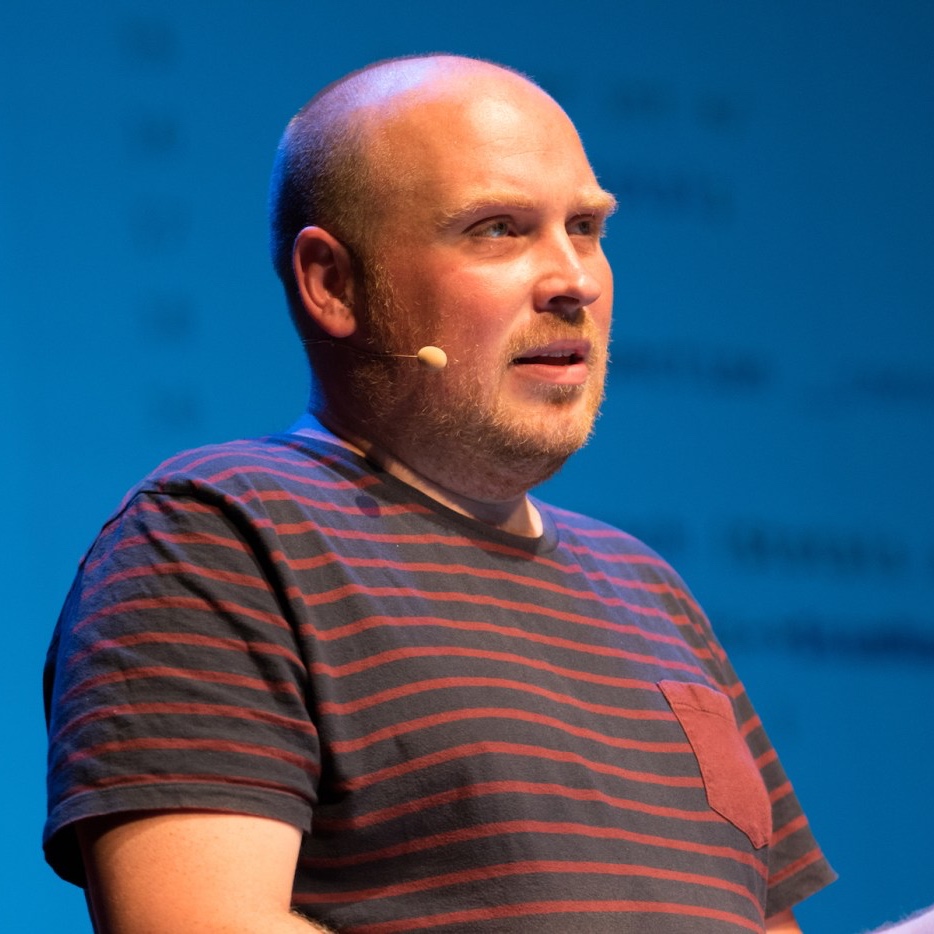
Build a Facebook chatbot in 10 minutes with PHP

In a new post on his site, Christoph Rumpel explains how you can quickly build a Facebook chatbot with PHP.

The chatbot topic is huge right now. Finally there is something quite new again and nobody knows what's happening next. This is the perfect time to start experimenting with chatbots and to build your own one right now. Give me 10 minutes of your time and I will give you your first chatbot!

http://christoph-rumpel.com/2016/08/build-a-php-chatbot-in-10-minutes/

Read more

Join 9,500+ smart developers

Get my monthly newsletter with what I learn from running Spatie, building Oh Dear, and maintaining 300+ open source packages. Practical takes on Laravel, PHP, and AI that you can actually use.

No spam. Unsubscribe anytime. You can also follow me on X.

moment().endOf(‘term’)

Without any doubt Tim Wood, the creator of the awesome moment.js library, has done a lot for the community. It's really a shame that the constant pressure of maintaining the library has taken it's toll.

The correlation between Open Source and burnout is no secret, and I am not immune to it. ... Seeing bugs and issues continue to roll in and being mentally unable to address them has led to feelings of failure and depression. When looking at the moment project, I could only see the negatives. The bugs and misnomers and mistakes I had made. It let to a cycle of being too depressed to contribute, which led to being depressed because I wasn’t contributing.

https://medium.com/@timrwood/moment-endof-term-522d8965689

Read more

Practicing YAGNI

In a new post on his blog Jason McCreary, creator of Laravel Shift, wrote down the summary of his Laracon US talk.

I consider myself a searcher. On a quest to find the Holy Grail of programming practices - that single practice which instantly levels up my skills. While I know this doesn’t exist, I do believe in a set of practices. Recently, I found one to be YAGNI.

YAGNI is a principle of eXtreme Programming - something I practice daily at work. YAGNI is an acronym for You Aren’t Gonna Need It. It states a programmer should not add functionality until deemed necessary. In theory, this seems straightforward, but few programmers practice it.

http://jason.pureconcepts.net/2016/08/practicing-yagni/

Read more

Some handy collection macros original

by Freek Van der Herten – 4 minute read

Laravel's collection class is truly wonderful. It contains a lot of handy methods and you can create some very elegant code with it. In client projects I found myself adding the same macro's over and over again. That's why my colleague Seb and I took some time to create a package aptly called…

Read more

Things I learned from reading Laravel: Up and running original

by Freek Van der Herten – 3 minute read

Matt Stauffer is currently putting the final touches on his new book called Laravel: Up And Running. It aims to be a good guide for newcomers to the framework. But even if you've got some experience with Laravel, it should be worth your time to read it. Even Matt himself picked up a lot of cool…

Read more

The next version of Laravel News has been launched

Earlier today laravel-news.com, the official Laravel news source, received a new coat of paint. In a post announcing the launch Eric shares how the site works behind the curtains.

During this move, I have redone the way the site is powered. Previously it ran on WordPress with a custom theme I put together, it worked fine but added new features, and sections became harder and harder, and I wanted the ability to use what I am comfortable with, Laravel. However, I didn’t want to give up the media library and editing experience of WordPress.

So to have the best of both worlds I kept the old site on WordPress and used the WP Rest API paired with the Laravel Scheduler. This allows me to automatically sync data from WordPress into my database without having to rebuild an entire CMS admin area. I have the same setup for the podcast section, and it hooks into the Simplecast API to pull those over.

https://laravel-news.com/2016/08/welcome-to-the-next-version-of-laravel-news/

I sure would like to read a tutorial on how that sync works in detail.

Read more

Comparing laravel-mediable with laravel-medialibrary

Laravel-Mediable is a package to upload and handle all sorts of files (aka media) in a Laravel app. It was built by a Canadian based web agency called Plank.

With it you can do things like this:

$media = MediaUploader::fromSource($request->file('thumb'))
    ->toDestination('uploads', 'post/thumbnails')
    ->upload();

$post = Post::create($this->request->input());
$post->attachMedia($media, ['thumbnail']);

Pretty cool. You can read more on the way and how the package was built in an introductory post on the Plank blog.

At Spatie we've also built our own solution for handling media. In Plank's blogpost Sean lists these differences between their package and our Medialibrary.

spatie/laravel-medialibrary plank/laravel-mediable
Relationship many-to-one polymorphic, each media record is owned by one related model many-to-many polymorphic, each media record can connect to any number of related models, and vice versa.
Filesystem Files are stored in directories named after the media id relative to the disk root Files can be stored anywhere on the disk
Association Identifier Each media record belongs to one "collection" Media can be attached to a model with any number of "tags"
Aggregate Types Support for images and pdfs Configurable support for any number of custom types
Miscellaneous Features Glide manipulations Synchronization commands

Since our medialibary was introduced I've been asked from time to time why our medialibrary uses a many-to-one polymorphic relationship. The answer is: simplicity.

A previous iteration of our Blender CMS (a version that used Zend Framework 1 instead of Laravel ?) had a screen where the user could pick a file from all uploaded files (it looked much like this wordpress screen). We saw that, after having set up a lot of sites with Blender, that almost none of our clients used that screen...

In our projects we also see that our clients mostly need to attach an image, or a pdf or whatever, ... to only one model (for instance a news item). It rarely happens that a client wants to attach the same file to different models.

In our code we want to handle that use case as simple as possible and that's why we preferred using a many-to-one relation over a many-to-many relation. All the other differences listed in Plank's post are caused by the same reasoning, we preferred simplicity and ease of use over flexibility.

If you're looking for a good solution to handle media in a Laravel app I suggest you take a look at both our Medialibrary and Plank's Mediable package. Both packages are good at what they do. Pick the one that best fits your project (and just feels good to you).

Read more

The traits of a proficient programmer

Gregory Brown wrote an excellent article on how you can grow as a programmer.

Do you know what the difference between competence and proficiency is? ... Competence means having enough experience and knowledge to get stuff done; proficiency involves knowing why you are doing something in a certain way, and how it fits into the big picture. In other words, a proficient practitioner is always a competent practitioner, but the opposite may not be true.

https://www.oreilly.com/ideas/the-traits-of-a-proficient-programmer

Read more

Adding a vue component to Spark

On his blog Christoph Rumpel explains how you can add a vue component to a Spark app.

Taylor Otwell, the creator of Laravel, is a big Vue fan and this is why you will find it in a lot of Laravel products. Spark is using Vue too. ... When I started to use Spark I wanted to use some of my already given .vue components too, but since Spark is a little bit different from standard Laravel projects I didn’t managed to use them. After some weeks of reaching out for help, I finally got the solution.

http://christoph-rumpel.com/2016/05/Larave-Spark-Using-Vue-Component/

Read more

Testing your composer dependencies with prefer-lowest

An older but still relevant post by Evert Pot on why and how you should also test your packages with the lowest versions of it's dependencies.

In some projects, there may be packages lying around that are not the latest version. This could be because it introduced some BC break, or introduced a bug.

If other packages also use the package that’s being held back, they may get an older version as a dependency.

So for package maintainers, they will want to find out if their package correctly works with the oldest package they claim to support.

https://evertpot.com/testing-composer-prefer-lowest/

EDIT: Here's another old, but also still relevant, blogpost on the subject by Cees-Jan Kiewiet:

https://blog.wyrihaximus.net/2015/06/test-lowest-current-and-highest-possible-on-travis/

Read more

Things you want to know about Let's Encrypt

On his blog Simone Carletti gives a good overview of everything Let's Encrypt has to offer (and he also touches on what the service doesn't offer)

Let’s Encrypt is a new certificate authority that entered the internet scene at the end of 2015. ... However, Let’s Encrypt is not only free. Quoting the homepage: Let’s Encrypt is free, automated, and open.

But what does it mean? In this article I’ll share some of the direct consequences of that quote to help you better understand how Let’s Encrypt (currently) works. My goal here is not to judge or advertise the service offered by Let’s Encrypt (either in a negative or positive way), rather provide an overview of what you should expect if you use this service, and let you decide whether Let’s Encrypt is a good fit for you or not.

https://simonecarletti.com/blog/2016/02/things-about-letsencrypt/

Read more

Our packages are now postcardware original

by Freek Van der Herten – 1 minute read

My company has released a lot of PHP and Laravel packages. According to the packagist stats they have been downloaded for a little over 700 000 times. Up until now they've all been free. That is going to change. Our packages are now postcardware. This means that from now on you are required to send…

Read more

Validating SSL certificates with PHP

With vanilla PHP it's possible to check of if the SSL certificate of a given site is valid. But it's kinda madness to do it. Let's look at the code required:

<br />// Step 1: downloading the certificate from the site
$streamContext = stream_context_create([
    'ssl' => [
        'capture_peer_cert' => true,
    ],
]);

$client = stream_socket_client(
    "ssl://spatie.be:443",
    $errorNumber,
    $errorDescription,
    $timeout,
    STREAM_CLIENT_CONNECT,
    $streamContext);

$response = stream_context_get_params($client);

$certificateProperties = openssl_x509_parse($response['options']['ssl']['peer_certificate']);

// Step 2: parsing the certificate

/*
* I'm not even going to type out the further code needed.
*
* `$certificateProperties` has two keys `validFrom_time_t` and `validTo_time_t`. 
* Those keys contain the UTC representation of the date.
* You will need to check if the current date is between those dates.
*/ 

What. The. Actual. F. Let's fix this!

We've released a new package named spatie/ssl-certificate that makes checking the SSL certificate of a site laughably easy. Let's take a look at the code:

$certificate = SslCertificate::createForHostName('spatie.be');
$certificate->isValid(); // returns true if the certificate is currently valid

Boom, done.

The package has a few more methods that makes working with an SSL certificate a breeze:

$certificate->getIssuer(); // returns "Let's Encrypt Authority X3"

$certificate->getDomain(); // returns "spatie.be"

//A certificate can cover multiple (sub)domains. Here's how to get them.
$certificate->getAdditionalDomains(); // returns ["spatie.be", "www.spatie.be]

$this->certificate->validFromDate(); // returns an instance of Carbon

$certificate->getExpirationDate(); // returns an instance of Carbon

You can also use isValid to determine if a given domain is covered by the certificate. Of course it'll keep checking if the current datetime is between validFromDate and expirationDate.

$this->certificate->isValid('spatie.be'); // returns true
$this->certificate->isValid('laravel.com'); // returns false

The source code of the package is available on GitHub. My company has made many more PHP framework agnostic, Laravel and JavaScript packages in the past. Take a look at the open source page at our site to see if we've made anything that could be of use to you.

Read more

How to use PHP Solarium in a Laravel project

Apache Solr is a high performance search engine much like Elastic. On his blog Peter Steenbergen explains how you can use Solr in a Laravel app.

This is my second blog in a series about SOLR with the PHP Solarium library. My first blog was about the usage of OR filters to create Multi-Select facets with SOLR. With this blog item I will show you how easy it is to implement the PHP Solarium library in the Laravel framework.

http://petericebear.github.io/laravel-php-solarium-integration-20160725/

Read more

Comparing Laravel with Zend Expressive

In a post on masterzendframework.com Matthew Setter shares his experiences with building the same application in both Laravel and Zend Expression.

The reason being, is that you can't give a straight yes or no answer. It's like asking: is desktop Linux as easy as Windows? The presumption there is that you want to do exactly the same thing in Linux as you can with Windows.

Well, if you wanted the exact same experience on Linux, as you get with Windows, then use Windows! As you're working with two different systems, two different approaches to solving the same challenge, then the end result may be the same — but how they work will naturally be different.

So it is with Laravel and Zend Expressive. They're two exceptional PHP frameworks which can be used to create similar applications. Yet they were designed with different preconceptions about how an application's should be put together. They were designed for different developer mindsets. And the list goes on.

So, whilst I was able to create the same application, roughly about the same size, the way they were developed was different.

http://www.masterzendframework.com/zend-expressive-or-laravel/

I'm currently perfectly happy in the Laravel ecosystem, so I won't be making a switch soon. But I like to keep an eye out on how other frameworks and communities are doing things to learn from that.

Read more

The new Closure::fromCallable() in PHP 7.1

PHP 7.1 will have a neat function to create closures from callables. Joseph Silber explains the function and offers some good examples on his blog.

With PHP 5.5 going EOL earlier this week and the PHP 7.1 beta expected later this month, now sounds like a good time to look into a neat little feature coming in 7.1: easily converting any callable into a proper Closure using the new Closure::fromCallable() method.
  • A short refresher on closures in PHP
  • When you need to convert a callable to a Closure
  • Introducing Closure::fromCallable()
  • Creating a closure that wraps a private method

https://josephsilber.com/posts/2016/07/13/closure-from-callable-in-php-7-1

Read more