Event sourcing with a little help from AI
– albertoarena.it - submitted by Alberto Arena
A Claude Code skill that helps you design and generate event-sourced domain code for Laravel using spatie/laravel-event-sourcing
Read more [albertoarena.it]
Posts tagged with spatie
– albertoarena.it - submitted by Alberto Arena
A Claude Code skill that helps you design and generate event-sourced domain code for Laravel using spatie/laravel-event-sourcing
Read more [albertoarena.it]
This practical guide shows how to use spatie/laravel-health together with Oh Dear to detect vulnerable Composer dependencies in production and get alerted quickly. It also shows how adding composer audit in CI gives you an extra early warning layer.
Read more [ohdear.app]
Join 9,500+ smart developers
Get my monthly newsletter with what I learn from running Spatie, building Oh Dear, and maintaining 300+ open source packages. Practical takes on Laravel, PHP, and AI that you can actually use.
No spam. Unsubscribe anytime. You can also follow me on X.
"As a Laravel developer, this is the one newsletter I most look forward to. Freek has a talent for distilling packages or techniques down to something immediately useful - one tip can save you hours and even weeks. It's concise and practical and highly relevant."
Ruben explains the full rewrite behind TypeScript Transformer 3 and why the new architecture makes the package much more flexible. The post covers the new transformer pipeline, AST-based output, improved type parsing via PHPStan, and a watch mode for faster development.
Read more [rubenvanassche.com]
Hafiz compares Scotty with Laravel Envoy and explains why Spatie's new deploy tool is a nicer fit for SSH-based deployments. He walks through the plain bash format, improved terminal output, migration path, and zero-downtime deployment workflow.
Read more [hafiz.dev]
Nick wrote about how native browser features like the dialog element, the Popover API, and anchor positioning could eventually replace much of what we use shadcn and Radix for at Spatie today. A thoughtful look at where the web platform is heading and what it means for our frontend stack.
Read more [spatie.be]
We just released v7 of spatie/laravel-query-builder, our package that makes it easy to build flexible API endpoints. If you're building an API with Laravel, you'll almost certainly need to let consumers filter results, sort them, include relationships and select specific fields. Writing that logic by hand for every endpoint gets repetitive fast, and it's easy to accidentally expose columns or relationships you didn't intend to.
Our query builder takes care of all of that. It reads query parameters from the URL, translates them into the right Eloquent queries, and makes sure only the things you've explicitly allowed can be queried.
// GET /users?filter[name]=John&include=posts&sort=-created_at $users = QueryBuilder::for(User::class) ->allowedFilters('name') ->allowedIncludes('posts') ->allowedSorts('created_at') ->get(); // select * from users where name = 'John' order by created_at desc
This major version requires PHP 8.3+ and Laravel 12 or higher, and brings a cleaner API along with some features we've been wanting to add for a while.
Let me walk you through how the package works and what's new.
We're proud to release v3 of laravel-site-search, a package that crawls and indexes your entire site. Think of it as your own private Google. Point it at a URL, let it crawl every page, and get full-text search results back.
Previous versions required Meilisearch as the search engine. That works well, but it means running a separate service.
With v3, your application's own database is all you need. It supports SQLite, MySQL, PostgreSQL, and MariaDB out of the box, and it's the new default.
Let me walk you through it.
We just released v10 of laravel-backup, our package that creates backups of your Laravel app. The backup is a zip file containing all files in the directories you specify, along with a dump of your database. You can store it on any of the filesystems Laravel supports, and you can even back up to…
Our spatie/crawler. package is one of the first one I created. It allows you to crawl a website with PHP. It is used extensively in Oh Dear and our laravel-sitemap package.
Throughout the years, the API had accumulated some rough edges. With v9, we cleaned all of that up and added a bunch of features we've wanted for a long time.
Let me walk you through all of it!
When you share a link on Twitter, Facebook, or LinkedIn, the platform shows a preview image. Getting those Open Graph images right usually means either using an external service or setting up a separate rendering pipeline. We just released laravel-og-image, a package that lets you define your OG image as HTML right inside your Blade views. The package takes a screenshot of that HTML and serves it as the OG image. No external API needed, everything runs on your own server.
Let me walk you through what the package can do.
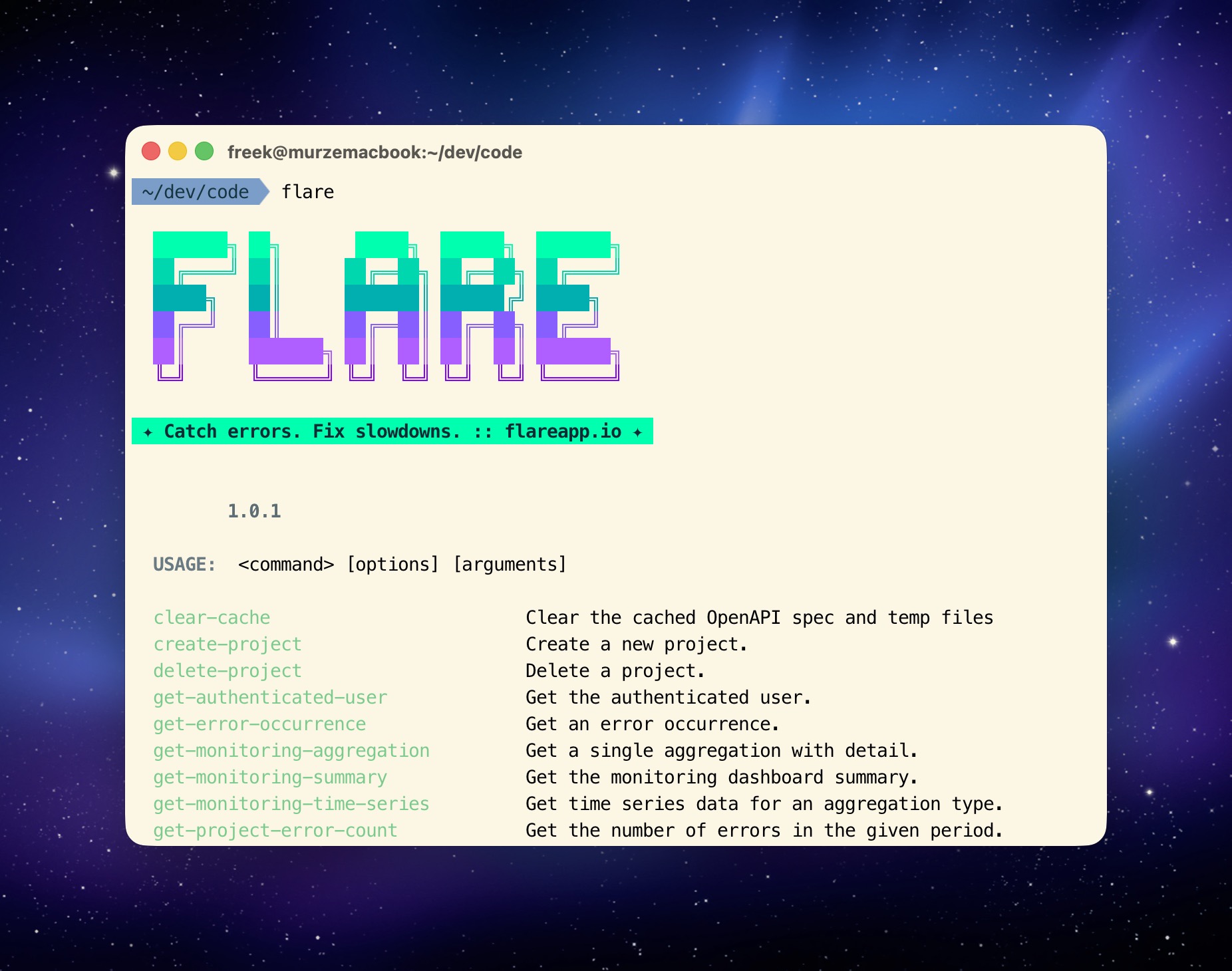
At Flare, we track errors and monitor performance for your applications. Until now, that meant opening the Flare dashboard in your browser whenever you wanted to check on things.
We just released the Flare CLI, a command-line tool that lets you manage your errors, projects, and performance monitoring data directly from the terminal. It also ships with an agent skill that lets AI coding agents like Claude Code and Cursor use Flare on your behalf. And the fun part: the entire CLI was built with almost no hand-written code, generated from our OpenAPI spec.

Let me walk you through how to install and use the CLI.
PHP 8.0 introduced attributes, and they're a great way to add structured metadata to classes, methods, properties, constants, and parameters. The concept is solid, but the reflection API you need to actually read them is surprisingly verbose. What should be a simple one-liner ends up being multiple lines of boilerplate every time. And if you want to find all usages of an attribute across an entire class, you're looking at deeply nested loops.
We just released spatie/php-attribute-reader, a package that gives you a clean, static API for all of that. Let me walk you through what it can do.
We just published a new package called Laravel OpenAPI CLI that turns any OpenAPI spec into dedicated Laravel artisan commands. Each endpoint gets its own command with typed options for path parameters, query parameters and request bodies.
Let me walk you through what the package can do.
Our laravel-responsecache package speeds up your app by caching entire responses on the server. When the same page is requested again, the cached response is served without hitting your controller at all.
We just released v8, a new major version with a powerful new feature: flexible caching. It uses a stale-while-revalidate strategy, so that every visitor gets a fast response, even when the cache is being refreshed.
Let me walk you through it.
We just released laravel-screenshot, a new package to take screenshots of web pages in Laravel apps.
It uses a driver-based architecture, so you can choose between Browsershot (which requires you to install Chromium) and Cloudflare Browser Rendering (which can be used on environments like Laravel Cloud).
Let me walk you through the package.
Laravel's built-in authorization is great when permissions are defined in code. With gates and policies, you can write logic like this:
// Defined in code, requires a deploy to change Gate::define('edit-posts', function (User $user) { return $user->is_admin; });
But in some projects roles and permissions are dynamic: created by users, managed through an admin panel, or changed at runtime without deploying code. Our Laravel Permission package can help you dynamically create roles and permissions.
We just released v7 which doesn't bring any new features, but cleans up the internal code and modernizes it. Let me walk you through what the package can do.
A while ago, we released laravel-pdf, a package to generate PDFs in Laravel apps.
Under the hood, it used Browsershot (and therefore Puppeteer/Chrome) to convert HTML to PDF. That approach works great, but it does require Node.js and a headless Chrome binary on your server.
Last week, my buddy Dries shared on X how to generate PDFs using Cloudflare services. This way doesn’t require Node or any binaries. Very neat! This unlocks PDF generation for environments where Node or Chrome cannot be installed easily, like Laravel Cloud.
To support this way of rendering a PDF, we’ve released a new major release (v2) of Laravel PDF. The package now ships with three drivers: Browsershot, Cloudflare Browser Rendering, and DOMPDF. You can also create your own driver. On top of that, we've added queued PDF generation and the ability to set PDF metadata. And to let your AI understand our package, we've added a Laravel Boost skill.
Let me walk you through all of it.
If you're using AI tools like Claude Code to help write code, you've probably noticed they don't automatically know your team's coding conventions. The AI might write perfectly valid PHP, but it won't follow your specific style guide unless you tell it to. That's the problem Laravel Boost solves. It…
– tighten.com - submitted by Kayla Helmick
We released version v1.5.0 of Parental, our package that adds support for Single Table Inheritance (STI) in Laravel. This new version allows types to become other types and use numeric type columns instead of strings. It also adds new helper methods for eager-loading.
Read more [tighten.com]
Shawn Hooper enjoys the new presets we recently added to our Laravel CSP package.
Read more [shawnhooper.ca]