Digital Sovereignty Is Written in PHP
An interesting article on how PHP is used by the government.
Read more [thephp.foundation]
An interesting article on how PHP is used by the government.
Read more [thephp.foundation]
– ohdear.app – Edit
A good write-up on the ghost domain problem in DNS: domains removed from a registry can still appear healthy to uptime checkers because recursive resolvers keep stale delegations warm. The Oh Dear team explains the edge case and how they're tightening their resolver setup to reduce that blind spot.
Read more [ohdear.app]
Join 9,500+ smart developers
Get my monthly newsletter with what I learn from running Spatie, building Oh Dear, and maintaining 300+ open source packages. Practical takes on Laravel, PHP, and AI that you can actually use.
No spam. Unsubscribe anytime. You can also follow me on X.
"I’ve been reading freeks newsletter for a while now, and it’s easily one of my favorite developer newsletters. Freek shares practical, no-nonsense insights from running Spatie, maintaining hundreds of open-source packages, and shipping real products. Every time I get useful Laravel tips, smart tooling advice, always high quality and immediately applicable."
Streamline dynamic multi-domain routing in Laravel with Traefik by serving YAML via the HTTP provider for automated, secure, and scalable configuration management. Ideal for Laravel developers and DevOps teams who want to eliminate bulky static files and improve maintainability.
Read more [coz.jp]
– www.geocod.io – Edit
A cautionary tale about AWS VPC networking, NAT Gateways, and how a missing VPC Endpoint turned S3 data transfers into an expensive lesson.
Read more [www.geocod.io]
– www.geocod.io – Edit
After Geocodio unsuccessfully attempted to optimize with ClickHouse alone, they implemented a solution using Kafka for durable storage and Vector for efficient data ingestion.
Read more [www.geocod.io]
By implementing rate limiting at the edge, “dead requests” can be reduced.
Read more [james.brooks.page]
– tech.ahrefs.com – Edit
Choosing colocation for the infrastructure was the right decision for Ahrefs.
Read more [tech.ahrefs.com]
– flareapp.io - submitted by Spatie – Edit
Discover how we stopped a DDoS attack at Laracon!
Read more [flareapp.io]
– flareapp.io - submitted by Spatie – Edit
Discover how we're using Cloudflare Workers to perform API authentication on the edge to make our infrastructure more cost-effective.
Read more [flareapp.io]
– samwho.dev – Edit
An excellent blog post with clear visual examples on how the most command load balancing strategies work.
Read more [samwho.dev]
– rohanrd.xyz – Edit
Rohan Deshmukh on the value of avoiding SaaS products and self-host instead.
Read more [rohanrd.xyz]
It was as if someone had "pulled the cables" from their data centers all at once and disconnected them from the Internet.
Read more [blog.cloudflare.com]
– flareapp.io – Edit
Flare runs on a few different servers that each produce their own logs. In this post, you'll learn how you can combine multiple logs in a single stream.
Read more [flareapp.io]
– svenluijten.com - submitted by Sven – Edit
How you can leverage DNSControl and GitHub Actions to make DNS configuration a breeze.
Read more [svenluijten.com]
– usefathom.com – Edit
Jack Ellis shares what happend at his analytics service when one of his clients got viral
Read more [usefathom.com]
– blog.deleu.dev - submitted by Marco Deleu – Edit
This post offers a good explanation of VPC and related terms.
Read more [blog.deleu.dev]
Contrary to the title, Gilles Chehade that it's acutually doable running your own mailserver.
TL;DR: Mail is not hard: people keep repeating that because they read it, not because they tried it. Big Mailer Corps are quite happy with that myth, it keeps their userbase growing. Big Mailer Corps control a large percentage of the e-mail address space which is good for none …
Read more [poolp.org]
– Edit
On his recently redesigned Servers For Hackers site Chris Fidao published a free 6 part series on how to use Nginx as a load balancer.
We cover how to use Nginx as a load balancer, and see how load balancing affects our application.
– Edit
Varnish is a piece of software that, amongst other things, can make your website much faster. In a new post on his blog, Mattias Geniar tells you all about it.
Varnish can do a lot of things, but it's mostly known as a reverse HTTP proxy. It brands itself as an HTTP accelerator, making HTTP requests faster by caching them. ... Varnish is usually associated with performance, but it greatly increases your options to scale your infrastructure (load balancing, failover backends etc) and adds a security layer right out of the box: you can easily let Varnish protect you from the httpoxy vulnerability or slowloris type attacks.
https://ma.ttias.be/varnish-explained/
Be sure to watch Mattias' excellent talk he gave at this years Laracon:
– Edit
As a user I've pretty much turned my back to Facebook, but boy must it be interesting to work at that scale. Here's how Facebook built their mobile device lab.
... We needed to be able to run tests on more than 2,000 mobile devices to account for all the combinations of device hardware, operating systems, and network connections that people use to connect on Facebook. Today, in our Prineville data center, we have a mobile device lab — outfitted with a custom-built rack — that allows us to run tests on thousands of phones. The process of building a lab in our data center wasn't a direct path, and we learned a lot along the way...
https://code.facebook.com/posts/300815046928882/the-mobile-device-lab-at-the-prineville-data-center/
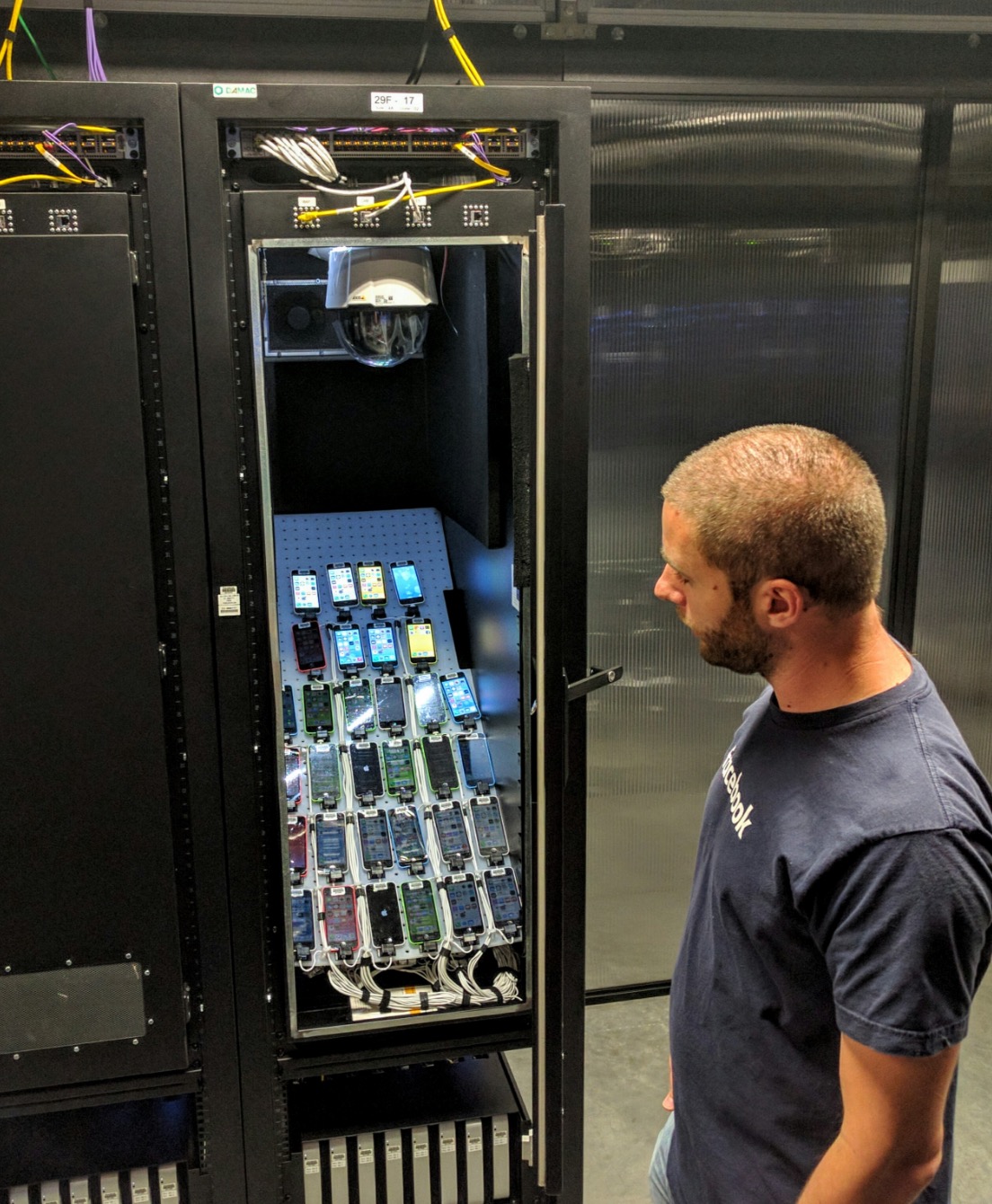
I stumbled on this story via Bram.us. Subscribe to the RSS feed of that site if you haven't done so already.