Functional architecture: the pits of success
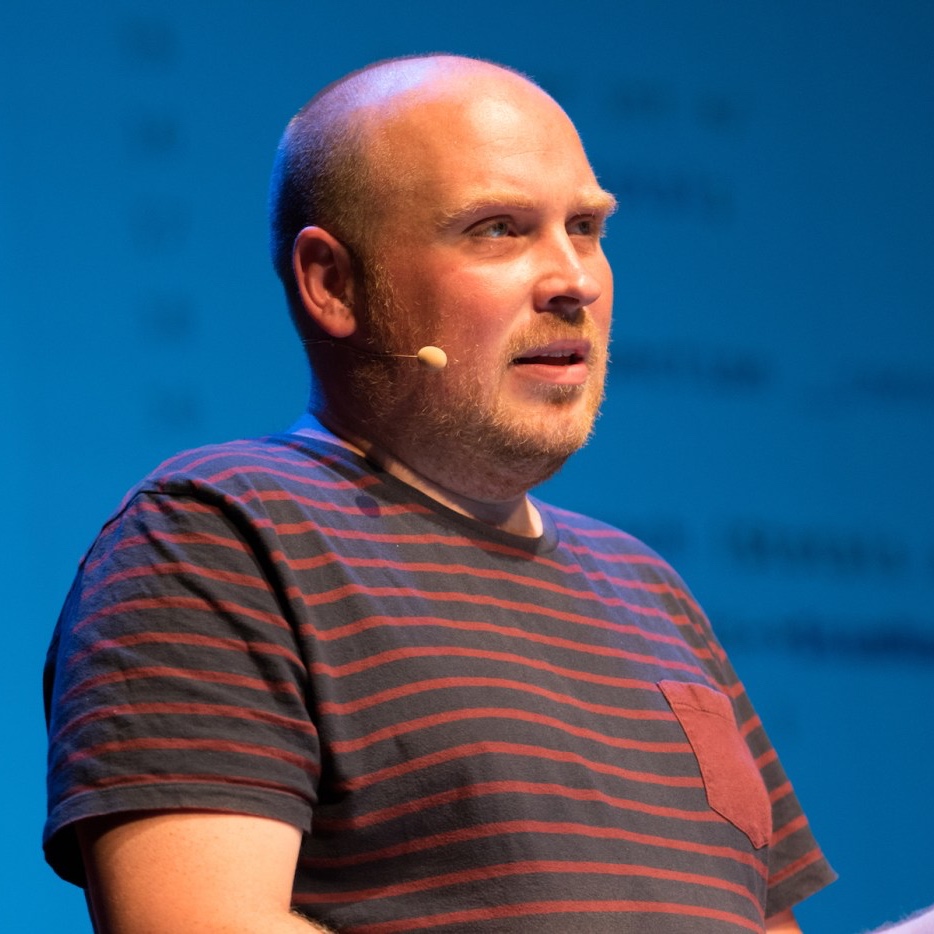
Here's a talk by Mark Seeman that explains the differences between object oriented and functional programming.
All my posts about architecture.
Here's a talk by Mark Seeman that explains the differences between object oriented and functional programming.
On his blog, Mathias Verraes started a series of posts on patterns for decoupling in distributed systems. I'll link to just one of the posts here, but they're all worth your time.
The mind switch is to think of the passage of time as just another Domain Event, exactly like all the other events. After all, if we define a Domain Event as a granular point in time where something happened that is relevant to the business, then certainly the next business day, month, or quarter, is extremely relevant.
Read more [verraes.net]
Join 9,500+ smart developers
Get my monthly newsletter with what I learn from running Spatie, building Oh Dear, and maintaining 300+ open source packages. Practical takes on Laravel, PHP, and AI that you can actually use.
No spam. Unsubscribe anytime. You can also follow me on X.
"I’ve been reading freeks newsletter for a while now, and it’s easily one of my favorite developer newsletters. Freek shares practical, no-nonsense insights from running Spatie, maintaining hundreds of open-source packages, and shipping real products. Every time I get useful Laravel tips, smart tooling advice, always high quality and immediately applicable."
The last few months I gave a talk on how to get started with event sourcing at several conferences and user groups. I took the time to record the talk at home. It's now published on YouTube so everybody can enjoy it.
Recently we've released v2 of laravel-event-projector. The package is probably the easiest way to get started with event sourcing in Laravel.
One of the prominent new features is support for aggregates. While creating v2, I found it surprising that such a powerful concept could be implemented in so little code. In this short blog post, I'd like to explain how aggregates are coded up.
Laravel event projector is a package that aims to be the entry point for event sourcing in Laravel. It can help you setting up aggregates, projectors and reactors. Earlier today our team released v2. This version streamlines the projectors and reactors from v1 and adds support for aggregates.
In this blogpost I'd like to explain a potential problem with traditionally built applications. After that we'll take a look at what projectors and aggregates are. Finally we'll walk through an example how you can create an aggregate laravel-event-projector.
In an impressive blog post on his blog, React lead developer Dan Abramov, explains how React works on the hood.
This is a deep dive — THIS IS NOT a beginner-friendly post. In this post, I’m describing most of the React programming model from first principles. I don’t explain how to use it — just how it works. It’s aimed at experienced programmers and folks working on other UI libraries who asked about some tradeoffs chosen in React. I hope you’ll find it useful!
Read more [overreacted.io]
Jonathan Reinink proposes a new take on what Vue's role could be in a server rendered app.
What I have here is a classic server-side app, that uses server-side routing and controllers. There is no API. The controllers lookup the data from the database, and then pass it to the templates. Except, I'm not using any server-side (ie. Blade) templates. Instead I'm doing full client-side rendering using Vue.js. Confused yet? Let me explain.
Read more [reinink.ca]
Over at the Honeybadger blog, Starr Horne wrote an interesting article on the different types of UUIDs and ULIDs.
UUIDs are and will continue to be the standard. They've been around forever, and libraries are available in every language imaginable. However, new approaches are worth considering, especially as we enter a world that's increasingly run by distributed systems. New unique-id approaches may help us solve problems that weren't prevalent at the publication of RFC4122.
Read more [blog.honeybadger.io]
Christian Stettler explains why domain events and event sourcing should not be mixed up.
What do domain events have in common with event sourcing? Certainly the word “event” in the name. But beyond that, when talking to architects and developers in projects, at conferences or trainings, I often hear that domain events go well with event sourcing and that event sourcing is an ideal source of domain events. In this blog post I would like to outline why I personally do not share this view.
Read more [www.innoq.com]
The main thought behind hexagonal architecture is that by isolation the core logic of your app, adding more inputs (like an API or console app) or outputs becomes much easier. Here's a cool talk Mattias Noback gave a few years ago at SymfonyLive on the topic.
Christopher Rumpel launched a new video series on how Laravel works on the hood.
Laravel Core Adventures is a video series which explains how Laravel works under the hood. You will get several videos on different difficulty levels to learn about each topic. The first videos below are about the Laravel request lifecycle. Expect more to come when the full site is released in early 2019.
At the LaraconLive India conference, Shawn McCool shared some interesting ideas on how to handle models in complex apps.
If you want to speak at the 2019 edition of the conference, you'll be happy to learn that they currently have a CFP running.
My colleague Brent shares how we've been structuring our non-trivial projects at Spatie.
In this post we'll look at a different approach of structuring large code bases into separate domains. The name "domain" is derived from the popular paradigm DDD, or also: domain driven design.
Read more [stitcher.io]
Here's another excellent post by Matthias Noback.
Reuse-in-the-small is definitely possible. Reuse-in-the-large is deemed to be impossible, because no two problems/projects are alike, but practice proves otherwise. There are reusable components covering entire subdomains, which are nonetheless quite successful. The chance of success is bigger if such a reusable component is used to cover for a generic subdomain. Using an off-the-shelf solution in such a case helps you save development effort which can instead be redirected to the core domain.
Read more [matthiasnoback.nl]
Mariko Kosaka, an engineer at Google, started a beautifully illustrated series on how Chrome works behind the scenes.
In this 4-part blog series, we’ll look inside the Chrome browser from high-level architecture to the specifics of the rendering pipeline. If you ever wondered how the browser turns your code into a functional website, or you are unsure why a specific technique is suggested for performance improvements, this series is for you.
Read more [developers.google.com]
In most applications you store the state of the application in the database. If something needs to change you simply update values in a table. When using event sourcing you'll take a different approach. All changes to application state are stored as a series of events. The key benefit is that you…
Mark Baker, serial conference speaker and creator of the PhpSpreadsheet package shares some thoughts on how to create private classes using anonymous classes.
I’ve written before about the benefits of using PHP’s Anonymous Classes for test doubles; but Anonymous Classes also have potential usecases within production code as well. In this article I’m going to describe one such usecase that can be particularly useful within libraries, and that is replicating the access of Package Private (in Java), or Protected Internal Classes (as per C#).
Read more [markbakeruk.net]
Mattias Noback shares how you can migrate a code base that fetches its dependencies using static method calls to code that uses dependency injection.
I've worked with several code bases that were littered with calls to
Zend_Registry::get(),sfContext::getInstance(), etc. to fetch a dependency when needed. I'm a little afraid to mention façades here, but they also belong in this list. The point of this article is not to bash a certain framework (they are all lovely), but to show how to get rid of these "centralized dependency managers" when you need to.
Read more [matthiasnoback.nl]
– dev.to
A great post by Barry O Sullivan on what, in my mind, is one of the biggest advantages of event sourcing: the ability to create projections.
Projections are a necessary part of any event sourced or CQRS system. These systems don't rely on a single generic data source such as a normalised MySQL database. Instead you build up your data sets by playing through the events, i.e the “film”, "projecting" them into the shape you want. This allows lot of flexibility as you're no longer bound by a single data model on which you have to run increasingly monstrous SQL queries (12+ joins anyone?). With projections you can build a data model specifically for the problem/question at hand.
Read more [dev.to]
At the Devoxx UK conference Michiel Rook gave a good intro talk on Event Sourcing.