Join 9,500+ smart developers

Get my monthly newsletter with what I learn from running Spatie, building Oh Dear, and maintaining 300+ open source packages. Practical takes on Laravel, PHP, and AI that you can actually use.

No spam. Unsubscribe anytime. You can also follow me on X.

Watch the Flare reveal live original

by Freek Van der Herten – 2 minute read

These past eight months Marcel Pociot, me and our teams at Beyond Code and Spatie have been working on a secret project called Flare. We believe that Flare is going to change the way you work with Laravel. To be kept in the loop subscribe to our mailinglist.

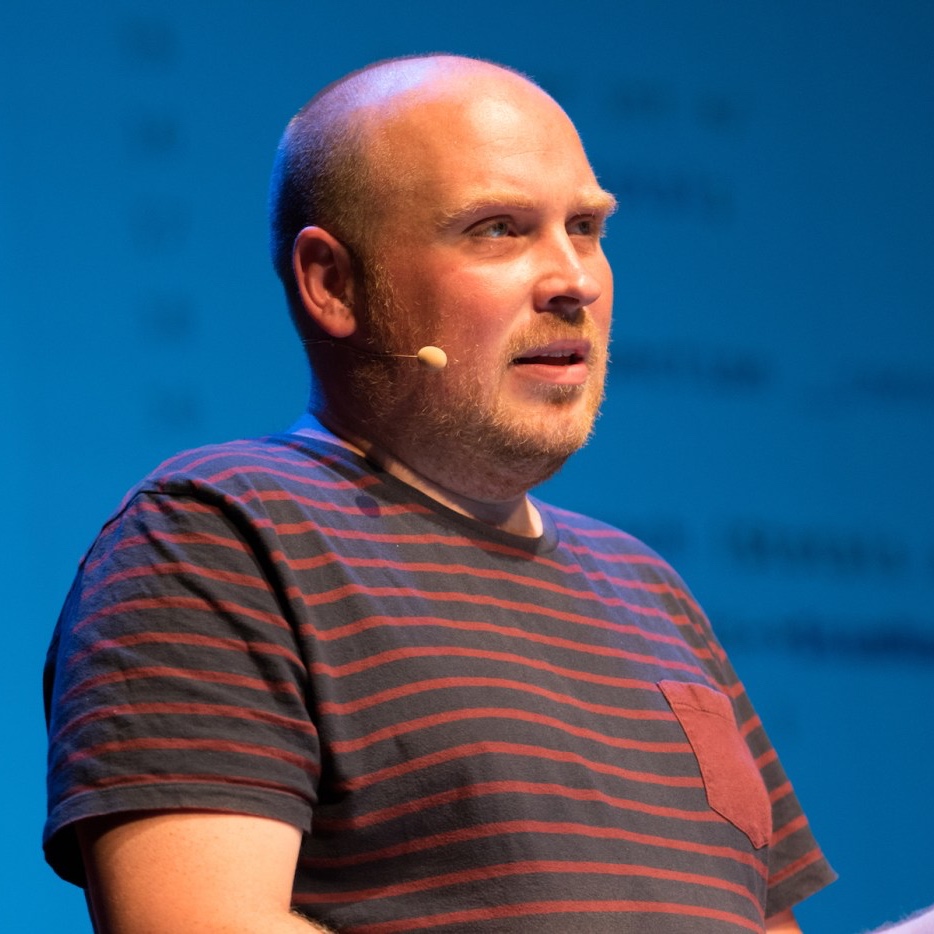
We are going to launch it this Friday at Laracon EU at 16.30 local time (15:30 CET). The Laravel News YouTube channel will live stream the launch. You can watch the stream right below.

Read more

Multiple forms with same input names on one page

stefanbauer.me

Stefan Bauer explains how to handle error message when you have multiple forms on one page

Here's another tip! Even if it's documented here I just wanted to show it. Here's the deal: Imagine you have multiple forms one page. For example one contact form and another newsletter signup form. Both of them might have an email field. So who do you know which email field doesn't validate and throws an error?

Read more [stefanbauer.me]

Supercharging common controllers original

by Freek Van der Herten – 2 minute read

From time to time our team needs to create fairly complicated CRUD interfaces from scratch. While this isn't rocket science, there surprisingly aren't that many good resource out there on how to do this. That's why our team dove in and published a couple of packages that can help create modern CRUD…

Read more

Automatically detect broken links after a deploy

ohdear.app

You can use the Oh Dear! API to automatically perform health checks on your app after a deploy.

You can use our API to trigger an on demand run of both the uptime check and the broken links checker. If you add this to, say, your deploy script, you can have near-instant validation that your deploy succeeded and didn't break any links & pages.

Read more [ohdear.app]

JAMstack as a beginner

dev.to

I hear more and more people talking about JAMstack. Here's a good post that explains what it is.

JAMstack is am excellent way to build fast, secure and static websites. (keep in mind, not every JAMstack website has every element of the JAM - the core feature that they all have in common is that they are serverless)

Read more [dev.to]

Lazy collections in Laravel

github.com

Unsung Laravel hero Joseph Silber opened up a very interesting PR to Laravel. Let's hope this one gets accepted.

Whereas the existing Collection class wraps a native array, the new LazyCollection class wraps a native iterator, while still providing most of the methods that we know and love from a regular collection.

Read more [github.com]

4 Ways The Laravel Service Container Helps Us Managing Our Dependencies

christoph-rumpel.com

Christoph Rumpel wrote a clear post on how you can use Laravel's service container.

The service container is a quite complex topic, and I see many struggling to understand what it does. It was the same for me, and the main reason is that many explanations concentrate on "how" to use the container. With this article, I want to give you my introduction to this topic by focusing on the "why" and "when" the container can help us with our dependencies.

Read more [christoph-rumpel.com]

10 rules to code like NASA (applied to interpreted languages)

dev.to

Here a some great tips on how to write robust software.

NASA's JPL, which is responsible for some of the most awesomest science out there, is quite famous for its Power of 10 rules (see original paper). Indeed, if you are going to send a robot on Mars with a 40 minutes ping and no physical access to it then you pretty damn well should make sure that your code doesn't have bugs.

Read more [dev.to]

Laravel and Murphy’s Law

medium.com

Patrick Brouwers, the creator of Laravel Excel, explains how to handle failing jobs in Laravel

When designing software, don’t only think about the happy path. Write down (preferably with (unit) tests) what all the things are that could go wrong. Then design your solution to be able to recover those situations. (Wether or not automatic.) There isn’t a single solution to rule them all, some processes might need to have specific failure handling while others are fine with the default approach.

Read more [medium.com]

Some Shifty Bits

jasonmccreary.me

Laravel Shift creator JMac did a write up of the talk he gave at this year's Laracon US

I received a lot of valuable feedback from these talks. So I combined them by using analytics from Shift to identify underutilized features of Laravel and demonstrate them with code.

Read more [jasonmccreary.me]

Cost & Performance optimization in Laravel Vapor

divinglaravel.com

Mohammed Said shares some solid tips on optimizing costs when working in a serverless environment like Laravel Vapor

Laravel Vapor uses different AWS resources to efficiently get your application up and running in the serverless cloud. The building block of the whole thing is AWS Lambda, it's where the actual computing happens. Calculating the cost of the compute part for your application can be a bit confusing, so let's simplify it a bit with an example.

Read more [divinglaravel.com]

Viewing model counts in the Laravel Debugbar

reinink.ca

Jonathan Reinink has added a very usefull metric to Laravel debugbar

Last week at Laracon US I gave a talk titled Eloquent Performance Patterns. In that talk I used a custom Laravel Debugbar metric I created to track how many Eloquent models were being hydrated throughout a request. I've had a lot of people asking about this, so today I submitted a pull request to the Laravel Debugbar to add this as an official metric.

Read more [reinink.ca]